
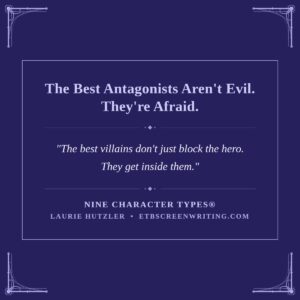
 The best antagonists aren’t evil. They’re afraid. This is one of the most misunderstood principles in storytelling.
Evil is a supernatural phenomenon. Fear is a very human condition. And the most disturbing, most memorable antagonists in prestige drama operate almost entirely out of fear — rather than malice.
Here’s what that fear looks like:
Fear of not having enough. Gordon Gekko points out a homeless man on the street to Bud Fox in Wall Street — and in that single gesture reveals everything. His ruthlessness isn’t greed for its own sake. It’s terror. He is determined to put poverty behind him forever, no matter what it costs anyone else.
Fear of being dismissed or cheated out of what’s rightfully theirs. Alex Forrest in Fatal Attraction refuses to be thrown away after Dan Gallagher ends their affair. She is not simply obsessive. She is convinced she is owed something — and that she will not be ignored.
Fear of losing control. Nurse Ratched in One Flew Over the Cuckoo’s Nest enforces her cruelty with rigid precision because she believes any weakness in her rules creates a vulnerability others will exploit. Every challenge to her authority is a genuine threat — to her safety, not just her power.
This is what makes great antagonists so deeply unsettling. We recognize them. Their fears are human fears — distorted, weaponized, turned outward — but recognizable.
And the antagonist’s greatest weapon is never physical force. It’s the ability to activate the protagonist’s fear. To push them toward their worst self. To make them act against their own values and best interests.
The best villains don’t just block the hero. They get inside them.
When you’re evaluating a story — or writing one — ask: what is the antagonist afraid of? How is that fear justified in their own mind? And how are they using it as a weapon against the person standing in their way?
Answer those questions, and your antagonist stops being an obstacle. They become a force of nature.
No comment yet, add your voice below!