
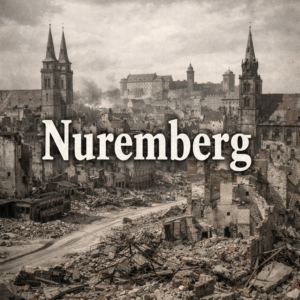
 The Trial That Never Ends:
What Two Nuremberg Films Reveal About the Nine Character Types®
Both films are set in the shadow of the same courtroom. Both are serious, prestigious works about Nazi war crimes and the reckoning that followed.
Yet Judgment at Nuremberg (1961) and the 2025 Nuremberg — James Vanderbilt’s psychological thriller with Russell Crowe and Rami Malek, now streaming on Netflix — feel so radically different that viewers sometimes wonder if they belong to entirely different genres.
They do. The difference is the Character Type at the dramatic engine of each film. Once you see it, you understand everything — including why the 2025 film ends not with a verdict, but with a suicide.
The Dramatic Engine Is Everything
In the Nine Character Types® framework, the Character Type powering the protagonist determines the story’s central question, the nature of conflict, and what kind of truth the audience walks away carrying.
Power of Truth characters are driven by a need to perceive what is genuinely real, no matter the cost. Their stories ask: what is true when truth requires something unbearable of us?
Power of Reason characters are driven by a need to understand — to find the system, the logic, the explanation. They believe the world makes sense if you analyze it correctly. Their stories ask: can this (evil) be understood? And what happens to the person who tries to make the world understand?
Same courtroom. Completely different dramatic souls.
Judgment at Nuremberg (1961): The Power of Truth Story
Stanley Kramer’s film is, at its core, a Power of Truth drama — and Spencer Tracy’s Judge Dan Haywood is its engine.
Haywood arrives in Germany as a genuine outsider: a modest judge from Maine with no political agenda and no personal stake in the verdict. His worldview is simple and devastating. He will look at what actually happened. Not at what is convenient to believe, not at what the State Department needs for Cold War optics, not at what the charming German social world wants him to see. He needs to understand what is genuinely true about what occurred in this courtroom — and why.
This is the hallmark of a Power of Truth Character Type in action. They cannot be bought or managed, not because they are morally superior, but because they are constitutionally incapable of accepting a false picture of reality.
Against him stands Hans Rolfe — Maximilian Schell in his Oscar-winning performance — a Power of Reason Character Type and the perfect intellectual foil. Rolfe’s defense is technically brilliant. He doesn’t deny the crimes. He constructs a logical argument that distributed culpability so widely — to the Allies who signed treaties with Hitler, to American eugenicists who inspired Nazi law — that individual guilt becomes philosophically untenable. Every argument is technically airtight. Every argument is profoundly, spiritually empty.
Haywood’s arc isn’t about defeating Rolfe’s logic. It’s about recognizing the limit of logic as a path to truth. He doesn’t out-argue Rolfe. He simply refuses to accept that a technically valid argument constitutes reality.
Then there is Ernst Janning — Burt Lancaster — the film’s hidden heart. Janning is a Power of Conscience Character Type: a man of genuine moral conviction who compromised himself incrementally, who collaborated through silence and passivity rather than enthusiasm and belief. His shattering courtroom confession is the Power of Conscience’s defining journey — the long, costly return to alignment with values he never actually abandoned, only betrayed.
The lesson for writers: A Power of Truth protagonist doesn’t drive action through plot mechanics. They drive it through presence and clear seeing. Haywood’s willingness to look directly at what happened forces every other character to either tell the truth or reveal themselves in the act of hiding it.
Nuremberg (2025): The Power of Reason Story
Here is where the 2025 film makes its radical departure — and where the Nine Character Types® framework reveals exactly why this film had to end the way it does.
Rami Malek’s Douglas Kelley is a Power of Reason Character Type, and the film is his story. Kelley arrives at Nuremberg as a U.S. Army psychiatrist with a clear, logical mission: evaluate the mental status of the Nazi defendants, determine whether they are fit for trial, and in doing so, crack the code of evil. His worldview is the worldview of Reason at its most confident — if we can understand something, we can prevent it from happening again. Evil, to Kelley, is a problem to be diagnosed.
What he finds is the thing that destroys him.
Göring is not insane. He is not a monster in any clinical sense. He is intelligent, charming, strategically brilliant, and fully sane by every metric. He chose this. Ordinary sanity enabled extraordinary atrocity. The Power of Reason’s promise — that understanding leads to prevention — cannot survive this discovery.
And Russell Crowe’s Göring, a masterclass in Power of Will, is the perfect antagonist for a Power of Reason protagonist. The Power of Will without moral compass is among the most terrifying Character Types to place on screen. Göring treats the entire trial as a chess match he intends to win even from a prison cell. He coaches the other defendants. He manages his own image for posterity. He grants Kelley access not out of cooperation but out of control — every conversation is Göring’s opportunity to dominate the frame. He ultimately takes his own life rather than allow the Allies the satisfaction of the hangman.
Notice the structural perfection of this opposition. Kelley’s Power of Reason strength is analysis and systematic understanding. Göring’s Power of Will strength is dominating the present, bending every situation to his advantage. Kelley wants to understand Göring. Göring wants to use Kelley. And Göring, in the film’s devastating logic, wins.
The film’s intertitles deliver the verdict: Kelley returns to the United States, publishes his book, (which fails) descends into alcoholism, and in 1958 — thirteen years after Nuremberg — takes his own life by swallowing cyanide. The same method Göring used. The film doesn’t explain this. It doesn’t need to. The Power of Reason protagonist stared into the mechanism of evil long enough to absorb it.
This is the dark arc that the Nine Character Types® framework predicts for Power of Reason characters when they go wrong. Logic divorced from moral grounding doesn’t protect you. It creates a kind of intellectual fascination that can override self-preservation entirely. Kelley wanted an answer. He got one. The answer was unbearable. No one cared.
The lesson for writers: A Power of Reason protagonist in a dark arc doesn’t fail because they’re wrong. They fail because they’re right — and the truth they discover is one that reason alone cannot metabolize. The horror isn’t madness. It’s clarity.
What the Comparison Teaches
Placed side by side, these two films illuminate something essential about Character Type as dramatic engine.
Judgment at Nuremberg is intimate — small rooms, close faces, the texture of individual human conscience. Because its Power of Truth protagonist drives toward authentic reckoning with what actually happened, the film is about what it costs individual human beings to know what they know. Its emotional register is quiet, relentless, and finally devastating.
Nuremberg (2025) is psychological — mostly a tight two-handers, interrogation rooms, the dangerous territory between analyst and subject. Because its Power of Reason protagonist drives toward understanding through analysis, the film is about the terrible limits of that project. Its emotional register is unsettling, intellectual, and finally tragic.
Both films take the same event and ask it a completely different question. Judgment at Nuremberg asks: what is really happened and what is true? Nuremberg (2025) asks: can this evil be understood and prevented? The first film ends with a verdict that means something. The second ends with a brilliant man who knew exactly what he found — and couldn’t live with knowing it (when the rest of the world didn’t seem to care).
The Character Type at the center of a story isn’t just a character choice. It is the story’s entire emotional universe. Change the Character Type, and you change the question, the conflict, the arc, the ending, and the understanding the audience carries home.
That is the power of the Nine Character Types®.
Get the Power of Truth eBook HERE


No comment yet, add your voice below!