
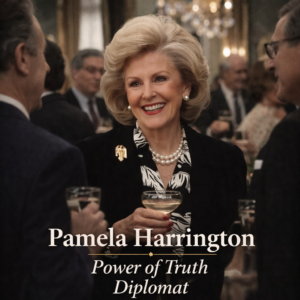
 Pamela Harriman, the British-born socialite who became one of Washington’s most influential political powerbrokers and served as U.S. Ambassador to France under President Clinton, embodied the Power of Truth Character Type in ways that shaped American politics for decades. She wasn’t a politician herself—she was something far more powerful: the person politicians came to for access, funding, and strategic counsel. She was the advisor, the confidant, the keeper of secrets who understood that real power operates behind the scenes, through relationships built on trust and the strategic sharing of confidences.
The Secret Keeper and Strategic Connector
Harriman’s genius lay in her understanding that nothing in politics is what it seems on the surface. Born Pamela Digby in 1920, she married into Churchill’s family during World War II, then later wed Averell Harriman, the wealthy American diplomat and Democratic power player. But her real influence came from her ability to investigate beneath the surface of political life—to understand who really held power, what they really wanted, and how to connect the right people at the right moment. She operated from the classic Power of Truth worldview: everyone has hidden agendas, all political relationships are transactional, and the person who understands the hidden dynamics controls the game.
Her famous Georgetown salon became legendary precisely because it functioned as a Power of Truth operation. She didn’t just throw parties—she curated strategic gatherings where rising Democratic politicians, wealthy donors, foreign dignitaries, and power brokers could connect away from public scrutiny. She asked the questions others didn’t think to ask: “What do you really need? Who do you really need to know? What’s the obstacle no one’s talking about?” She investigated people’s true motivations, their hidden vulnerabilities, their secret ambitions—and then strategically connected them with others who could help or who needed help. She was building a network based on confidences, creating an “us vs. them” dynamic where being inside Pamela’s circle meant access to power that outsiders could only dream of.
The Power of Truth Strategic Approach
Harriman exemplified the Power of Truth Character Type’s strategic embrace—moving toward people to build relationships that served larger goals. She didn’t command or demand; she cultivated. She made powerful men feel understood, wealthy donors feel essential, young politicians feel valued. She shared secrets to demonstrate trustworthiness, created intimacy through confidential conversations, and built loyalty by making people feel they were part of an inner circle that understood how things really worked. As the Nine Character Types® framework explains, Power of Truth characters “gain alliances through shared confidences and demonstrations of their own trustworthiness, loyalty and commitment.” Harriman mastered this completely.
Yet she also embodied the Power of Truth character’s contradictions. She needed to embrace others—building the relationships that gave her influence—while maintaining enough distance to see clearly, to calculate, to avoid being used herself. She investigated everyone (what’s their real agenda?) while presenting herself as the ultimate insider who could be trusted with anything. She built her power on being the advisor rather than the leader, more comfortable behind the scenes than in the spotlight, which is classic Power of Truth leadership style. Politicians came to her for counsel, donors came to her to understand where to place their bets, and everyone came to her because she knew what was really happening beneath Washington’s public performances.
Ambassador to France: The Perfect Role
When Clinton appointed Harriman as Ambassador to France in 1993, it was the perfect culmination of her Power of Truth journey. Diplomacy itself is a Power of Truth profession—nothing is what it seems, everyone has hidden agendas, relationships are built on strategic trust while maintaining skeptical distance. Harriman excelled at reading the room, understanding what the French really wanted versus what they said they wanted, building relationships with French officials while loyally serving American interests. She investigated beneath diplomatic niceties to find real leverage points. She used her legendary social skills to create informal channels where real negotiations could happen away from formal structures.
The Kingmaker’s Worldview
Harriman lived the Power of Truth worldview completely: life is a minefield where you must suspect everyone’s motives, trust carefully, and understand that all agendas are hidden. But unlike Power of Truth characters who fall into paranoid isolation, Harriman channeled this understanding productively. She didn’t withdraw from the political game—she mastered it by accepting its rules. She didn’t rage against the fact that politics operates through hidden deals and secret relationships—she became the person who facilitated those deals and built those relationships. She accepted that “maybe” was the best you could get in politics: maybe this candidate will win, maybe this policy will pass, maybe this relationship will prove valuable. She hung her entire influential life on those “maybes” and became one of the most powerful women in American politics without ever running for office herself.
Pamela Harriman died in 1997 while still serving as Ambassador, collapsing at the Ritz Paris pool—a fitting end for someone who spent her life at the intersection of power, diplomacy, and strategic relationships. She proved that the Power of Truth Character Type can thrive in the real world when you use your investigative instincts, your understanding of hidden dynamics, and your strategic relationship-building not for paranoid withdrawal but for creating genuine influence. She was the advisor every politician needed, the confidant everyone trusted, the keeper of secrets who never betrayed a confidence—and in being all those things, she became the kingmaker who shaped American politics from behind the scenes, exactly where Power of Truth characters are most comfortable and most powerful.


No comment yet, add your voice below!