
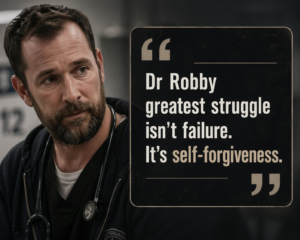
 Dr. Robby on The Pitt holds himself to a standard that would break most people.
He’s the kind of doctor who remembers every patient he couldn’t save. He mentors his residents the way his own mentor once mentored him, intensely committed to them. He shows up on the fourth anniversary of his mentor’s death because someone has to.
That’s the Power of Conscience Character Type.
These characters aren’t driven by ambition or approval. They’re driven by an internal moral code so exacting, so unrelenting, that doing the right thing isn’t a choice, it’s a compulsion. This is what makes Dr. Robby so compelling on screen and what makes him so dangerous to himself.
In Season 1, we watch his professional Mask erode over a single 15-hour shift. By the finale, he’s on the roof. Standing at the edge. Season 2 goes further. He rides his motorcycle without a helmet. He delays the sabbatical (a cross country motorcycle trip) everyone agrees he desperately needs (but are worried he won’t survive). He can’t forgive a colleague who’s done the hard work of getting better, even though he taught his own residents the ritual: “I forgive you. Please forgive me.”
By the finale, he finally admits it out loud: his work is killing him. Charge nurse Dana calls it what it is: martyrdom. That word is the key to the Power of Conscience character. They believe that suffering in service of others isn’t just acceptable, it’s required. The standard they hold for everyone else — get help, do the work, be honest, let go— is the one they can’t apply to themselves.
The Power of Conscience character’s greatest struggle isn’t failure. It’s self-forgiveness.
Both seasons of The Pitt are now streaming on Max.
Which character on a show your audience watches carries that same weight of impossible self-expectation?


No comment yet, add your voice below!