
Power of Idealism Month
 This month is Power of Idealism month. We’ll be examining the type of Character who strives for excellence and never settles for second-best. Life is grand opera, where every emotion is heightened. They can’t just feel pain, they feel extreme pain. A romantic gesture isn’t enough, it has to over-the-top. Power of Idealism Characters such as P.T. Barnum don’t have “complacent” or “satisfactory” in their vocabulary.
Throughout April, we will look at epic heroes, separated lovers and those coming of age. These Characters are dramatic types who are never satisfied, and treat life as a never-ending pursuit for something better. They are passionate, intense and will never settle for anything less than the best. Even then, they will keep reaching for something better.
Coming-Of-Age Stories
 We’ve looked at Separated Lovers and Epic Hero stories. This week, we’re looking at the final of three types of Power of Idealism story. Coming-of-Age stories are tales of those who want to break free, stop being treated like a child and become something more. Classic examples of this type of story are Stand By Me, Bend it like Beckham and Billy Elliot.
In these stories, children sacrifice innocence for what adulthood can offer them. No child is grateful for the joys and innocence their age provide them. They want to be grown up and lose their innocence, and when they realize how wonderful it is to be young, it’s too late to go back.
In Stand By Me, a group of best friends find a dead body and their lives are changed forever. In Billy Elliot and Bend It Like Beckham, their protagonists, Billy (Jamie Bell) and Jess (Parminder Nagra) respectively, have a talent they struggle to develop and hide from their oppressive families and backgrounds.
These kinds of stories are all about loss- loss of innocence, being carefree with no responsibilities and loss of society’s tolerance. When you grow up, you realize your parents are flawed and vulnerable. You discover that people won’t be as lenient on you because you are no longer a child- when you make mistakes, the price you pay is higher. When you leave home, what seemed like a dream come true turns into hard reality.
IT and Stranger Things
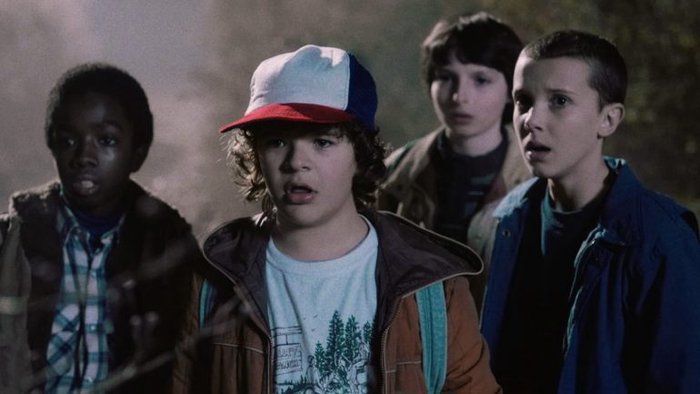 The most recent Coming-of-Age stories have been Stranger Things, and more notably last year’s remake of It. Both take place in small-town America in the 1980s, and both feature a group of friends realizing the world is bigger than their small towns of Hawkins, Indiana and Derry, Maine.
Both teams of kids- The Losers Club in IT and the gang in Stranger Things– face supernatural forces that threaten them all. The creatures from the Upside Down the arrival of Eleven, and the return of Pennywise the Clown force them to fight for their lives. People they know, friends and family, begin to disappear or die horribly and adults won’t believe them. They are forced to grow up in order to survive.
These groups of kids, and their coming-of-age stories, are remarkably similar. This isn’t surprising, as Stranger Things is clearly inspired by Stephen King’s IT. Both stories lean heavily on nostalgia, and Steven Spielberg movies like E.T. that also focus on loss of innocence through extraordinary events.
As these kids yearn to break free of their surroundings, taken seriously, and be allowed to do whatever they want, they learn that their is a cost to doing this. They need to grow up- that can mean saving their town from dark forces, making sacrifices for their skills on the stage or on a football pitch, or learning to take responsibilities for their actions.
All the movies and TV shows I have mentioned are universally popular because they resonate with all audiences. We were all young once, harboured the same desires and made the same mistakes as the young Characters on screen. We all wanted that which was impossible, and learned that growing up is hard.



No comment yet, add your voice below!